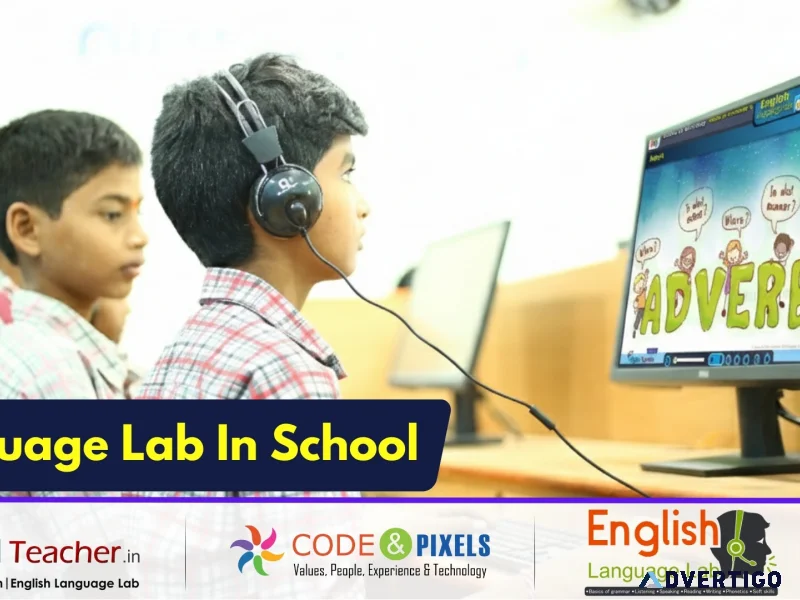
What to look for in english language lab software
Schools evaluating English language lab software are often faced with a long list of vendor claims and very little clarity on what actually matters in a classroom. A recent deployment at a government high school in Telangana offers a useful reference point for the kind of features that make a real difference as opposed to ones that sound good in a sales pitch but rarely get used. Offline Functionality Is Non-Negotiable for Many Schools A large share of government and rural schools deal with unreliable or non-existent internet connections. Any language lab that depends on a constant live connection is a liability from day one. Software designed to run fully offline avoids this entirely, meaning a school's ability to teach isn't held hostage to a broadband provider's uptime. Structured Proficiency Levels Matter More Than a Pile of Content It's easy for a vendor to advertise thousands of exercises, but without a clear proficiency structure, students and teachers have no way to measure progress. Labs organized around the CEFR framework the widely used international scale running from A1 (beginner) to C2 (advanced) give schools an actual benchmark. A student isn't just doing lessons ; they're moving from A1 to A2, with progress that can be tracked and reported. Vocabulary Needs Visual Reinforcement, Not Just Word Lists Rote memorization of word lists rarely sticks. Systems that pair vocabulary with images and context building a working vocabulary of several thousand words across levels tend to produce better retention than plain text-based drills, particularly for younger or lower-proficiency learners. All Four Skills Need Coverage, Not Just One It's common for language software to lean heavily on one skill (often reading or grammar) while treating speaking as an afterthought. A well-rounded lab covers listening, speaking, reading, and writing as connected components, with grammar and phonetics support woven through rather than bolted on separately. Speaking Practice Needs Feedback, Not Just Recording Simply having students record themselves speaking isn't enough many labs do this and stop there. The more useful systems provide real-time pronunciation feedback, so students can immediately hear what they got right or wrong instead of waiting for a teacher to review recordings later (which, in a large classroom, may never happen). Gamified Assessment Keeps Engagement Up Quizzes, interactive activities, and self-assessment tools do more than test knowledge they keep students motivated to keep practicing. Labs that build in light gamification tend to see better voluntary usage than those that feel like a digital worksheet. Design Matters for the Local Student Population Software built generically for a global audience often misses cultural and linguistic context that matters for Indian classrooms specifically including common pronunciation patterns influenced by regional languages. Labs designed with Indian learners in mind can ad
-
मूल्य: 10,000 INR
श्रेणी: प्रशिक्षण और शिक्षा सेवाएं
महत्वपूर्ण!
Advertigo पर बहुत सारे विज्ञापनदाता हैं। हम उन्हें एक-एक करके जाँच नहीं कर सकते।
आप अपनी मेहनत की कमाई के लिए एक भरोसेमंद कंपनी चाहते हैं। इसीलिए हम आपको धोखाधड़ी से बचाने में मदद करना चाहते हैं। इस अनुभाग में आपको जानकारीपूर्ण सुझाव और अन्य उपयोगी सामग्री मिलेगी जो आपको सतर्क रहने और ठगों के शिकार होने की संभावना को कम करने में मदद करेगी।
कृपया समझें कि Advertigo.net खरीदारों और विक्रेताओं को एक-दूसरे को खोजने में मदद करने के लिए एक निःशुल्क सेवा है। Advertigo.net किसी भी लेन-देन में शामिल नहीं है और हमारे उपयोगकर्ताओं की गतिविधियों पर नजर नहीं रख सकता।
उपयोगी लिंक
समान विज्ञापन

Best intermediate college in hyderabad join gatik
Gatik Junior College is the best intermediate college in Hyderabad. Offering the courses like MEC,
Gatik Juniorclg
Fire and industrial safety course in trichy
Join the Fire and Industrial Safety Course in Trichy to gain practical skills in fire
Abu
Explore quantum computing learning with qangles academy
Discover the world of quantum computing with Qangles Academy, an interactive quantum education platform designed
Qangles Academy

Yello school online education live classes skill development
Yello School – Online Education, Live Classes & Skill Development
Looking to upgrade your skills and
Yello School
 35,400 INR
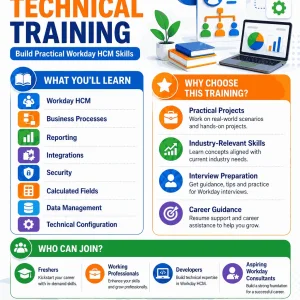
Workday hcm technical training online course with practical pr
Build practical skills with Workday HCM Training designed for freshers, working professionals, developers, and aspiring
Tech Pratham
 1 INR
1 INR
Sap certification training learn today lead tomorrow with e
Want to secure a high-paying job in top companies? Our industry-focused training gives you the
Midhubaashini

Digiperform rajouri garden
Digiperform offers AI-powered digital marketing courses with practical training, industry-focused certifications, live projects, and career-oriented
Digiperform
Quantum computing platform for hybrid computing and innovation
Qangles is a next-generation Quantum Computing Platform designed to help researchers, developers, enterprises, and technology
Qangles

Who is shikhandi in mahabharat know the story
Who is Shikhandi in Mahabharat? Shikhandi was a warrior associated with the Panchala kingdom and
Prabhupad Ashraya

Kle societys master of tourism travel management colleges in
KLE SNC’s Tourism and Travel Management College is one of the first to be established
Ttm-Klesncollege