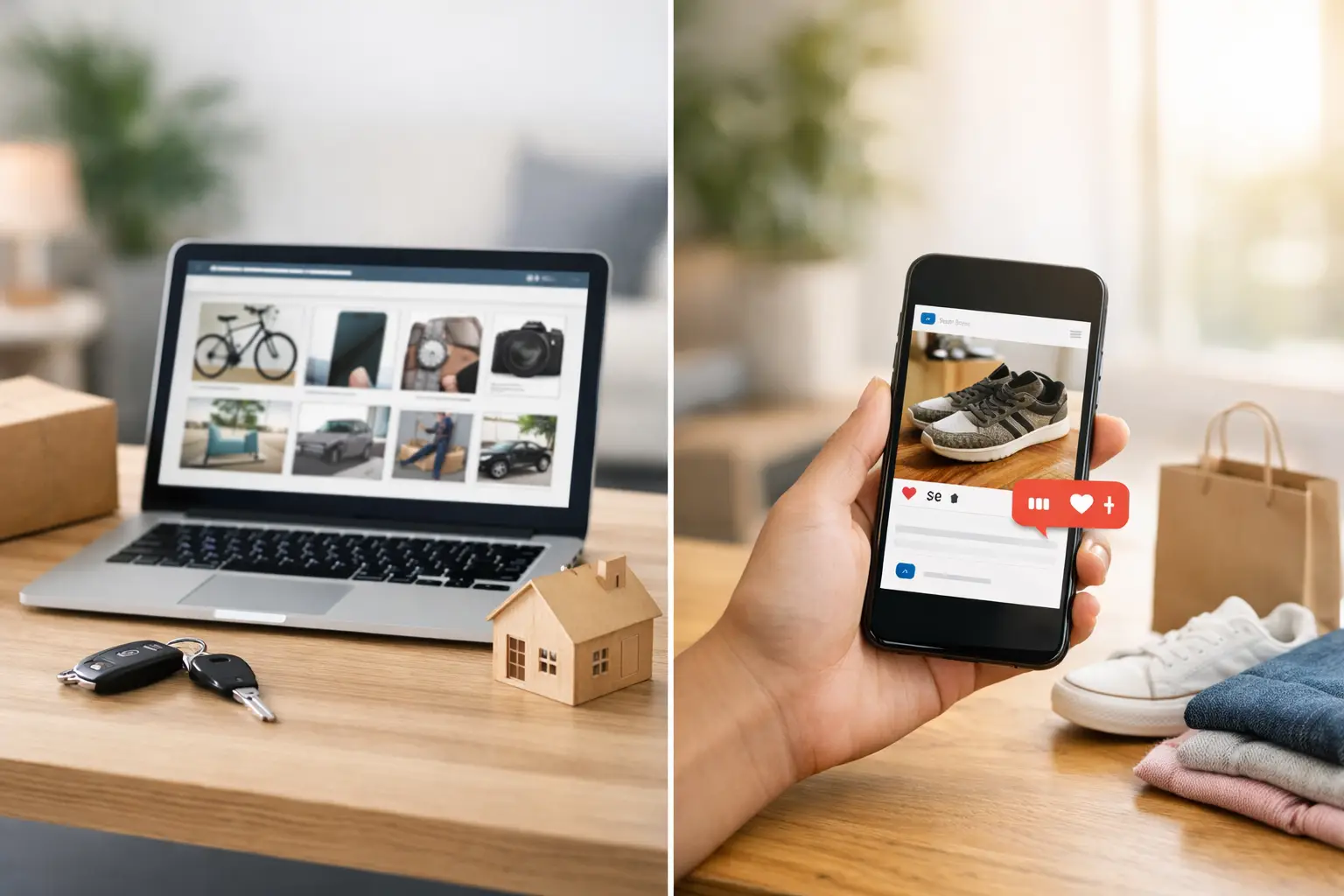
A used truck, a phone you no longer need, a lawn care service, or a weekend moving sale can all get attention online. But a classified listing vs social posting decision changes the kind of attention you receive. One puts your offer in front of people who are actively browsing to buy. The other puts it in front of people who may be scrolling for entertainment, updates, and conversation.
Both can help you sell or promote a service. The better choice depends on what you are offering, how quickly you need responses, and how much time you can spend answering messages, refreshing posts, and managing interest.
Classified Listing vs Social Posting: The Main Difference
A classified listing is built around an offer. You choose a category, add a title, price, description, photos, and contact details. Buyers browse categories or search for specific items because they already have a need. Someone looking in cars, electronics, furniture, or local services is usually closer to taking action than someone who happens to see a post in a social feed.
A social post is built around reach and interaction. It may be shared by friends, shown to followers, or surfaced in a local group. That visibility can be useful, especially when your offer has a strong visual angle or when people in your network know and trust you. But social posts move quickly. A post that gets attention in the morning can be buried by afternoon.
Think of it this way: classified sites organize demand. Social platforms interrupt attention. Neither approach is automatically better, but they produce different results.
When a Classified Listing Is the Better Choice
Classified listings work best when buyers are likely to search by category, location, item type, or price. They give an ad a clear home, making it easier for a shopper to compare offers and contact sellers without sorting through unrelated posts.
This is especially helpful for practical purchases. A buyer searching for a used car, replacement phone, appliance, tools, rental, or local contractor is often looking for details right away. They want to know the price, condition, location, and availability. A complete listing answers those questions before the first message arrives.
For small businesses and independent service providers, a listing can also keep working after the day it is posted. A cleaner, handyman, tutor, mobile mechanic, or reseller can place an offer in the right category and remain discoverable to people who browse later. On Advertigo, sellers can post free ads and use featured placement when they want more visibility for a time-sensitive offer or a competitive category.
Classified listings give buyers a clearer path
A good listing reduces unnecessary back-and-forth. The buyer can see what is for sale, what it costs, where it is located, and how to reach you. That leads to fewer vague messages such as “Is this available?” and more useful questions about pickup times, specifications, or payment.
Listings also give sellers more control over the sales message. Your price is not competing with comments, memes, unrelated updates, or a fast-moving group conversation. The ad is the focus.
Categories support higher-intent shopping
Categories matter because they match your offer with a buyer’s purpose. A person browsing cell phones is not just casually viewing a feed. They are likely comparing devices, storage sizes, carriers, conditions, and prices. The same applies to buyers browsing vehicles, general merchandise, or local services.
That does not guarantee a sale. Price, photos, and responsiveness still matter. But it puts your ad in a setting where buying and selling are the expected next steps.
When Social Posting Can Work Better
Social posting can be useful when your offer benefits from personal trust, quick sharing, or visual interest. A neighborhood group may be a strong place to announce a garage sale, promote a one-day event, or let nearby contacts know you have an item available for pickup.
It can also help when you are building awareness rather than trying to close one immediate sale. A local business might post completed work, seasonal specials, or before-and-after photos to remind people what it does. A reseller with an engaged following may use social posts to create interest before publishing individual items for sale.
The trade-off is that social attention is less predictable. Platform rules, group approval requirements, feed algorithms, and posting limits can affect who sees your post. Some groups do not allow commercial promotion at all. Others have strict schedules for sales posts, which means your offer may wait for approval or disappear in a crowded thread.
Social posts are strongest when people share them
A social post has an advantage when friends, customers, or local contacts can pass it along. This is useful for a community fundraiser, an urgent request, a limited-time service opening, or a hard-to-find item with broad appeal.
Still, shares do not always equal qualified leads. A widely shared post may bring questions from people outside your service area, buyers who expect a much lower price, or people who are only curious. Reach is valuable, but it is not the same as buyer intent.
Compare the Time and Effort Required
Before choosing a channel, consider the work after you hit publish. Social posting often requires frequent participation. You may need to reply publicly, monitor comments, answer direct messages, repost the offer, and keep up with group rules. If your post gets buried, you may have to create another one without sounding repetitive.
A classified listing requires setup upfront. You need a specific title, accurate description, fair price, and clear photos. Once it is live, however, its category placement makes it easier for interested buyers to find. You can update the ad if details change and renew visibility when needed.
For a casual seller, this usually means spending a few extra minutes building a useful listing instead of repeatedly trying to revive a short social post. For a small business, it can mean separating lead generation from daily social media maintenance.
Use Both Channels Without Duplicating the Same Message
You do not have to choose only one. Many sellers get better results by using classified listings as the main sales destination and social posts as an awareness tool.
Create the complete listing first. Include the details buyers need: item condition, price, location, available pickup or service area, and the best way to contact you. Then use a social post to announce the offer in a more conversational way. Mention the key benefit, add one strong photo, and tell interested people where they can find the full details.
This approach works well because each channel handles a different job. The social post creates initial attention. The listing holds the practical information and stays available for buyers who search later.
Avoid copying a long classified description into every social group. Social users respond better to a short, direct post. At the same time, avoid making the listing too brief just because you shared it elsewhere. Buyers who find your listing through search need the full picture.
Match the Channel to What You Are Selling
A single-item sale with a clear price usually fits a classified listing well. Examples include a used laptop, dining table, motorcycle, baby gear, or power tools. These buyers often want to compare options, check condition, and arrange pickup.
A service can benefit from both formats. A plumber, pet sitter, painter, or moving helper can maintain a category-based listing for ongoing discovery while using social posts to promote seasonal availability or recent work. The listing should explain the service area, typical jobs, and contact method. The social post can highlight one timely reason to act.
For low-cost items or fast local pickup, social groups may generate quick responses. Just be prepared to filter messages. For higher-value goods, category listings can attract more serious shoppers because people are taking the time to browse and compare.
Make Either Post Easier to Trust
Whether you publish a listing or a social post, buyers respond to clear information. Use real photos taken in good light. State the actual condition instead of using vague phrases such as “like new” when there are visible flaws. Include a price unless you have a clear reason not to, because missing prices often create extra messages without creating better offers.
Be specific about location and logistics. You do not need to publish your full address, but buyers should know the general area, whether pickup is available, and whether you can deliver. Service providers should state their service area and the type of work they handle.
Reply promptly, but keep communication practical. Confirm availability, answer direct questions, and set a clear time and place for any meeting. If something sells, update or remove the post so other buyers do not waste time contacting you.
The best place to post is the place that matches how your buyer shops. Put detailed offers where people search with purpose, use social channels when community reach can help, and give every serious buyer enough information to take the next step.