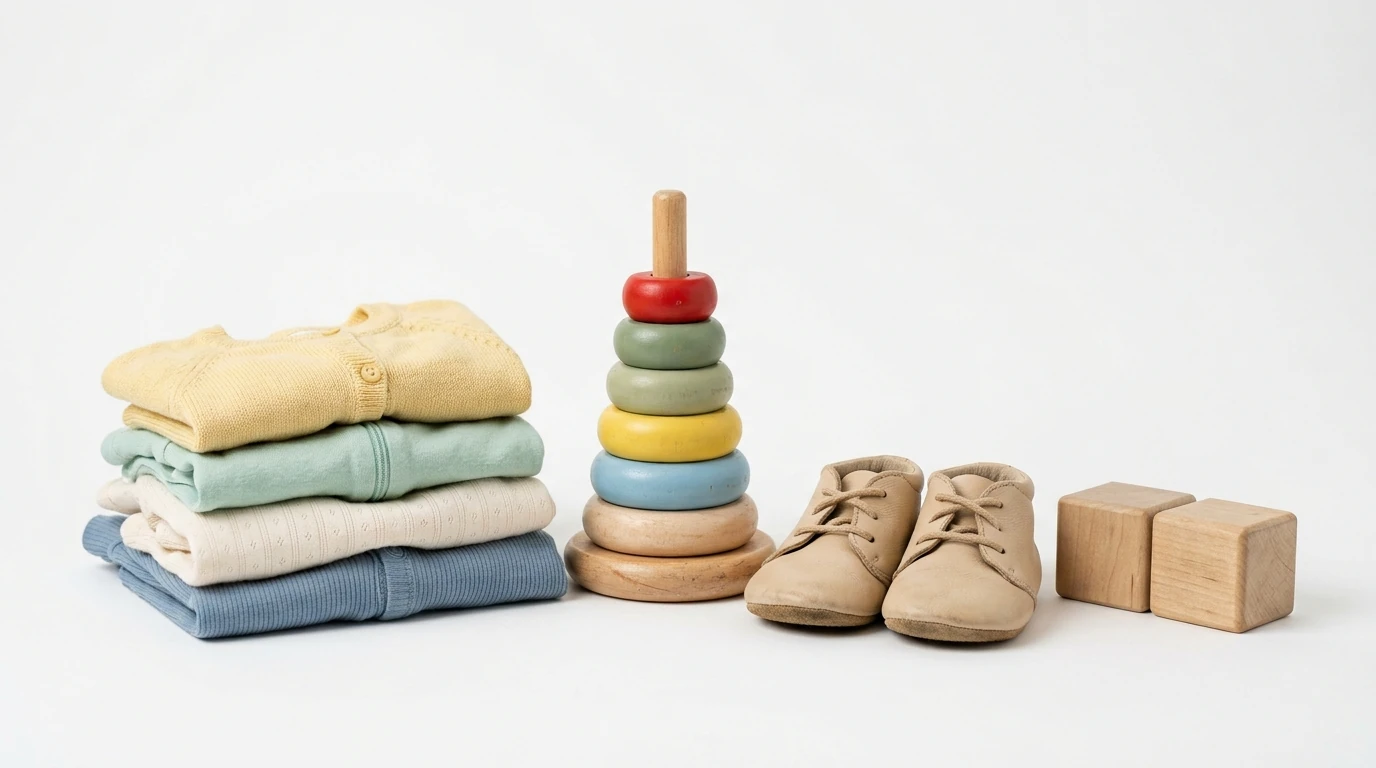
Nothing in a house has a shorter working life than the things a small child uses. A pram is indispensable for two years and then it is furniture in the hallway. A snowsuit fits for one winter. A set of clothes lasts three months, and the next size is already waiting in a bag somebody handed you. Every family goes through the same cycle, and every family ends up with a cupboard they cannot close.
That cycle is exactly why this is one of the best categories on any classifieds site. The things are barely used, because the child grew out of them rather than wore them out, and there is a steady stream of new parents at every stage behind you who need precisely what you have finished with. Supply and demand meet more neatly here than almost anywhere else.
It is also a category with real rules. Some items are worth good money, a few should never be sold secondhand at all, and one of them - the car seat - deserves genuine care. This is a guide to selling the lot properly: what holds its value, what to skip, and how to write the listing so a tired parent trusts it.
Why this category behaves differently
Two things make children's items unusual. The first is that the seller is almost never selling because the thing failed; they are selling because a birthday happened. Condition is generally far better than the price suggests, and saying so plainly in the ad is worth money.
The second is that the buyer is usually working to a deadline that is not negotiable. A baby arrives, a growth spurt happens, a nursery place starts. That makes these buyers decisive and quick to collect, in the same way the move-in buyers in our note on what starts selling when summer ends are - and it means a clear, complete listing converts unusually well.
Start with what holds its value
Not everything is worth listing separately. The items that reliably keep a decent share of their price are prams and pushchairs, travel systems, sturdy high chairs, stair gates, baby carriers and slings, cots and cot beds, changing units, bouncers, sterilisers, breast pumps where the parts can be replaced, and anything from a brand parents search for by name.
Below that line sits a large pile of small plastic things that are only worth selling in groups: bottles, bibs, small toys, board books, muslins, bath bits. Sort once, list the good items individually and the rest in bundles, and you will finish the job in an afternoon rather than a month. Our note on the best items to resell makes the same point about categories generally.
Prams are the anchor purchase
A pram or travel system is usually the largest single thing a family buys and the largest single thing they resell, so it deserves the most effort. Say the model and the year, whether it folds one-handed, whether the seat reverses, what the maximum weight is, and exactly which parts are included: raincover, footmuff, carrycot, adapters, basket, seat liner.
Adapters matter more than sellers expect, because a travel system without the right adapter is much less useful to the buyer. Photograph every component laid out together, mention any wheel wear or fabric marks honestly, and say whether it has been washed. Our guide to taking listing photos that sell covers the shots, and this is a category where a scale photograph of the folded size answers half the questions.
Car seats need their own paragraph
Car seats are the one item in this category where selling carelessly can genuinely matter. A seat that has been in a collision should never be resold, even if it looks perfect, because the shell can be damaged in ways you cannot see. Seats also have an expiry date moulded into the plastic, and most manufacturers set it several years after production.
If you sell one, be straightforward: give the model, the date of manufacture, confirm it has never been in an accident, say whether you have the manual and the original base, and check the manufacturer's website for open recalls before you list it. Plenty of buyers will not buy a used seat at all, and that is a reasonable position - but the ones who do will choose the seller who volunteered all of that.
What not to sell secondhand
A short list is worth being honest about. Cot mattresses are the main one: the usual advice is a new mattress for each baby, and buyers know it, so they rarely sell well anyway. The same caution applies to anything with a recall history, dummies and teats, worn slings with frayed stitching, and helmets that have taken a knock.
Check for recalls before listing anything with moving parts or a strap. It takes two minutes on the manufacturer's site, it protects the buyer, and it protects you from an awkward conversation later. Items that fail that check belong in the bin rather than in a bundle.
Clothes move in bundles, not singles
Children's clothing is the highest-volume, lowest-value part of the category, and trying to list it piece by piece is how people give up. Group it by size and season: a bundle of everything in one size, a set of winter layers, a bag of school-uniform basics, a set of sleepsuits. One photograph of everything laid out, one price, one collection.
Say the size in the title, count the pieces, and be honest about the two items with marks rather than hiding them in the middle of the pile. Parents buying a whole size at once expect a bit of wear and price accordingly; what they do not forgive is a surprise. Our guide to selling clothes and shoes secondhand covers the photography and measurements in more detail.
Toys sell best complete and clean
The difference between a toy that sells and one that sits is almost always completeness. Count the pieces, find the missing part if you can, say plainly if something is absent, and mention whether the batteries, the charger or the original box are included. A jigsaw with every piece is worth several times the same jigsaw sold as probably complete.
Wooden toys, ride-ons, train sets, building blocks and outdoor play equipment all hold value well. Give them a proper clean before photographing - it takes ten minutes and changes the price more reliably than any wording. And check the age marking, because parents shop by age band as much as by category.
Nursery furniture and the collection problem
Cots, cot beds, wardrobes, changing units and nursing chairs sell steadily, but they run into the same obstacle as all large furniture: getting them out of your house and into theirs. Put the dimensions in the ad, say whether it dismantles, whether you still have the fixings and the instructions, and how many people it takes to carry.
Say which floor you are on and whether there is a lift, and offer specific collection windows rather than a vague weekend. Half of the failed collections in this category are logistics, not price. Our guide to selling furniture with local pickup covers the details that turn an enquiry into a collection.
Write for a first-time parent
Many of the people reading your ad are buying this kind of thing for the first time and are quietly anxious about getting it wrong. They do not know the model names, they are not sure what an adapter is, and they are wondering whether secondhand is a sensible idea at all. Write as if explaining it to a friend.
Full sentences, plain words, the age range it suits, what is included, what condition it is genuinely in, and a line about how collection works. A sentence saying your own child used it and it served you well does more than any adjective. Our guide to posting ads that get replies sets out the structure.
Price it while it still fits somebody
The clock in this category is unusually loud. A snowsuit has a season, a stage-one car seat has a window of a few months, and a pram model gets superseded. Something priced to sell this week will nearly always beat the same thing priced ten percent higher and still sitting there when the season has moved on.
Round, obvious numbers work best, and a small amount of room for a polite offer is plenty. Expect some low offers - it is a budget-conscious category - and answer them the way our guide to handling lowball offers suggests: quickly, briefly, and without taking it personally. Our guide to pricing used items that actually sell covers how to find the number in the first place.
Meeting, timing and the school-run reality
Both sides of these deals are usually busy people with small children, which shapes the practical side. Offer a window rather than a moment, confirm on the morning, and be relaxed when somebody has to reschedule because a child is ill - it happens constantly here and it is not a red flag. Our guide to no-shows and time-wasters still applies, but with a longer fuse.
Keep the handover simple and daylight-friendly, and treat unusual payment requests the way you would in any category. Our buyer and seller safety checklist and our roundup of marketplace scams to watch right now cover the patterns worth recognising.
What to do with the pile that will not sell
Every sort produces a third pile that is not worth a listing: outgrown basics, single socks, half a jigsaw, the plastic things that came free with something else. Trying to sell it is how an afternoon turns into a fortnight, and it is the main reason people abandon the job halfway through with bags still in the hall.
Give that pile away instead. Local parent groups, nurseries, refuges and charity shops take clothes and toys in usable condition, and textile recycling takes the rest. Deciding this before you start - rather than agonising item by item - is what makes the whole clear-out finish in one go, and it leaves you listing only the things that are genuinely worth somebody's money.
A short checklist before you list
Sort into three piles: individually worth listing, bundle material, and recycling. Check for recalls on anything with straps or moving parts. Clean everything, count the pieces, and find the adapters and fixings before you photograph. Then write the size, the age range and what is included into the title and the first line of the description.
If a listing sits for a fortnight with plenty of views and no messages, treat it as a listing problem and work through it in order - first photograph, title, description, then price - as our guide on reviving a listing that didn't sell explains. On a marketplace like Advertigo, where posting an ad is free, the cupboard in the hall is the only thing that costs you anything.