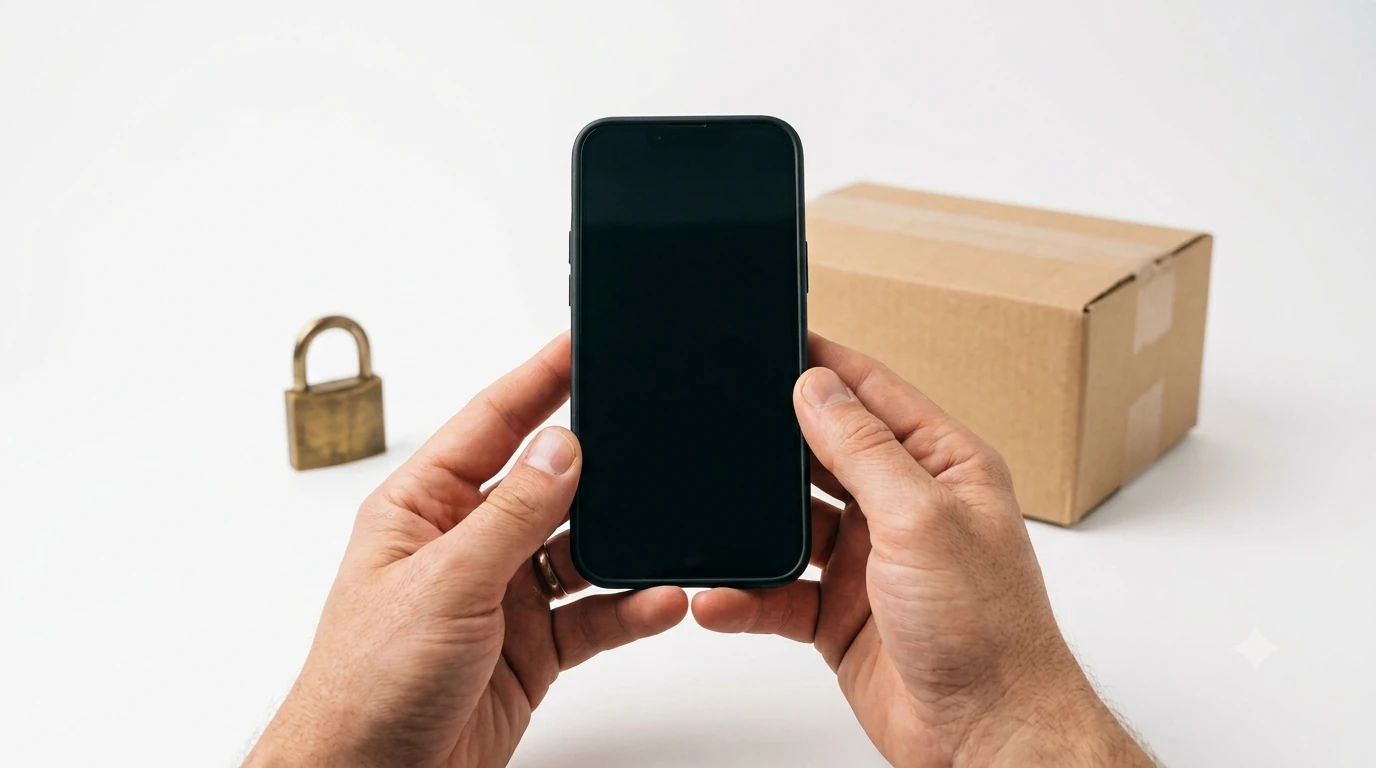
Almost every marketplace scam is a story about urgency. The message arrives with a reason to hurry - a courier already booked, a payment already sent, a buyer already on the way - and the whole trick depends on you acting before you think. The tactics change every year, but that shape never does, and once you can see it, most of them fall apart in the first two messages.
Late summer is a busy stretch for the people running these scripts. Holiday season means half the country is away from home and answering messages on a phone in a queue somewhere. Moving season means thousands of sellers are in a hurry to clear a flat by the end of the month. Both make people say yes to things they would question on a normal Tuesday.
Here is what is actually circulating right now, described the way it will appear in your inbox rather than as generic advice, along with the handful of habits that quietly defeat almost all of it.
The fake payment screenshot
This is the most common seller-side scam by a wide margin. The buyer says the money has been sent and produces a screenshot as proof: a bank app confirmation, an instant-transfer receipt, a payment-app notification. It looks right because it is meant to look right - there are apps and templates whose entire purpose is generating convincing fake receipts, and a screenshot is trivially easy to edit in any case.
The pressure comes next: the buyer is standing at your door, the transfer is "processing", the bank is "slow at weekends", and they would like the item now. The defence is a single rule that never needs an exception. A screenshot is not a payment. Money that has arrived is money you can see in your own banking app, in your own account, with your own eyes. Until then the item does not leave your hands, and no amount of impatience at your doorstep changes that.
The overpayment and the refund
A buyer sends more than the asking price - by accident, they say, or because the courier fee got included - and asks you to return the difference. The original payment is a cheque that will bounce, a reversible transfer, or a stolen card. It clears just long enough to look real, you send back the difference from your own money, and days later the original payment is pulled back out of your account.
The refund is the whole point of the scam; the item is often a bonus. Nobody genuinely overpays a stranger for a second-hand sofa, so treat an overpayment as a red flag on its own rather than a lucky accident. If money you did not expect arrives, the correct answer is to refuse the sale and let the sender reverse it themselves through their own bank, never to hand back cash.
"My courier will collect it"
You listed an item for local pickup only, and someone offers a little extra to have their own courier collect it instead. Sometimes the story is that they are away on holiday, or buying for a relative, or moving in next month. It sounds considerate. What it does is remove the one part of the transaction where a scam is hard to run: a person standing in front of you, handing over money you can count.
Once an unknown driver has the item, the payment reverses, the account disappears and there is no one to call. If you advertised local pickup, keep it local, and say so in the listing rather than negotiating it in messages - our guide to selling furniture with local pickup covers how to set those terms clearly enough that they do not get re-opened. If you do want to ship, ship on your own terms, with your own courier, after the money has actually landed.
The verification code that has nothing to do with your item
A buyer says they have been burned before and would like to confirm you are a real person. They are about to send a six-digit code to your phone; could you read it back to them? The code is real. It is just not confirming anything about you - it is the second factor on an account being created or taken over in your name, and you are the one authorising it.
There is no legitimate version of this request. No buyer, no platform and no bank needs a code that arrived on your phone to be read out to them, and anyone who asks is telling you exactly what they are doing. The same applies to any request to move the conversation to a messaging app "for verification" and then click a link that asks you to log in to something.
Scan this to get paid
The newest variation is the one that arrives as an image. Instead of a link, the buyer sends a QR code, or a "payment confirmation" page you reach by scanning one, and it takes you to something that looks like your bank or the marketplace itself. Fake QR codes have become one of the fastest-growing fraud tactics precisely because a square of dots gives you nothing to inspect - you cannot read a QR code and think "that domain is wrong".
The thing to internalise is the direction of travel. Receiving money never requires you to scan anything, log in anywhere, enter card details or approve a payment. Any process that asks a seller to authorise something in order to be paid is not a payment process, it is a withdrawal from your account wearing a costume. When in doubt, close it and open your banking app yourself, by typing the address or using the app you already have.
The buyer who returns a different item
This one targets sellers of anything valuable and compact. The buyer inspects the item at pickup, is happy, pays and leaves - and comes back a day later saying it is broken, with photos. The photos show a damaged item that is not quite yours: a different serial number, a different scratch pattern, sometimes a different model entirely. They want a refund and will return the broken one.
Photographs and timing are the whole defence. Take clear pictures of the item, including any serial number, on the day it leaves your hands, and keep the messages agreeing that the buyer checked it and was satisfied. The habits from our guide to taking listing photos that sell pay off twice here, because a listing that documented the real condition honestly is also the record that protects you afterwards.
What buyers are getting hit with instead
Buyers face a different menu, and the entry point is nearly always a deposit. An item is listed well below market value, there is a queue of interested people, and the seller will hold it for you if you send a small amount now. The item does not exist. The listing was copied from somewhere else, the photos came from a real advert months ago, and the deposit is the only product being sold.
The rule that removes this entire category is refusing to send money before seeing the item. If an item is real, its owner can send you a photo of it in a position you specify, next to today's newspaper or a piece of paper with their name on it. A seller who will not do something that costs them fifteen seconds is telling you the item is not in the room. Our buyer and seller safety checklist has the longer version of these ground rules.
Prices that are trying to tell you something
Deep discounts do a lot of work for scammers because they short-circuit the part of your brain that asks questions. A designer bag at a third of retail, a flagship phone at half price, three identical sealed games consoles from a seller with no history - each of those is a price doing something a price should not do. Sometimes the goods are counterfeit, sometimes they are stolen, and a buyer holding stolen property has an expensive problem even when they paid in good faith.
Knowing the real range for an item is the cheapest protection there is, and it is the same homework a good seller does anyway - our guide to pricing used items that actually sell shows how to establish that range in a few minutes. If a price sits far outside it, the interesting question is not "what a bargain" but "what is being hidden".
Categories where it is worth being slower
Some purchases deserve more than the standard checks simply because the money involved makes them worth a scammer's time. Phones and laptops can be locked to an account, blacklisted after a theft report, or reset to look healthy while hiding a failing battery, and a demonstration lasting two minutes will not reveal any of it. Working through our guides to buying secondhand electronics safely and buying used phones without regret takes longer than trusting a friendly seller and costs a great deal less.
Vehicles are the other category where the scams are old, well-practised and expensive. Deposits for a car nobody owns, documents that do not match the vehicle, and outstanding finance attached to the registration are all routine, and a car is usually the largest thing anyone buys from a stranger. Our guide to buying used cars without regret goes through the paperwork checks that catch most of it before any money moves.
The habits that defeat almost all of it
Nearly every scam above dies against four ordinary habits. Keep the conversation on the platform where there is a record. Meet in a public place in daylight, and take somebody with you for anything valuable. Confirm that money has arrived in your own account, in your own app, before the item changes hands. And never send a code, click a payment link or scan a QR code that a counterparty gave you.
The fifth habit is the one people find hardest: being willing to be rude. Every one of these scripts relies on you not wanting to seem suspicious or difficult towards someone who is being polite. A real buyer will wait an hour for a transfer to clear. A real seller will send one more photo. If someone reacts badly to a normal precaution, that reaction is the most useful information you will get all day, and walking away costs you nothing but one sale.
If something already went wrong
Move quickly and in the right order. Contact your bank or payment provider first, because reversal windows are measured in hours rather than days. Report the account to the platform so the listing and the profile can be pulled before anyone else answers it. Then report it to the police or your national fraud reporting service - not because a single case is usually recovered, but because patterns are what get networks shut down, and yours is rarely the only report.
Keep everything while you do it: the messages, the profile name, the phone number, the payment reference, the screenshots they sent you. Do not delete the conversation out of embarrassment, and do not confront the person yourself. And do not let one bad experience convince you that the whole market is unsafe - our piece on whether selling through classifieds is safe puts the actual risk in proportion.
A two-minute routine before your next deal
Read the profile and the message history before you read the offer. Ask one specific question about the item that a copied listing cannot answer. Agree the meeting place and the payment method in writing, on the platform, before anyone travels. Check your own account for the money rather than a screenshot of theirs. If anything in that sequence gets skipped, resisted or hurried, stop and let the deal go.
On a marketplace like Advertigo, where posting an ad is free, the sale you decline this week costs you nothing but a few days - and the whole business model of a scam is that you will not spend those two minutes. Spend them, and the messages that were designed to rush you simply stop working. For a longer look at the wording that attracts serious buyers in the first place, see our guide to posting classified ads that get replies.