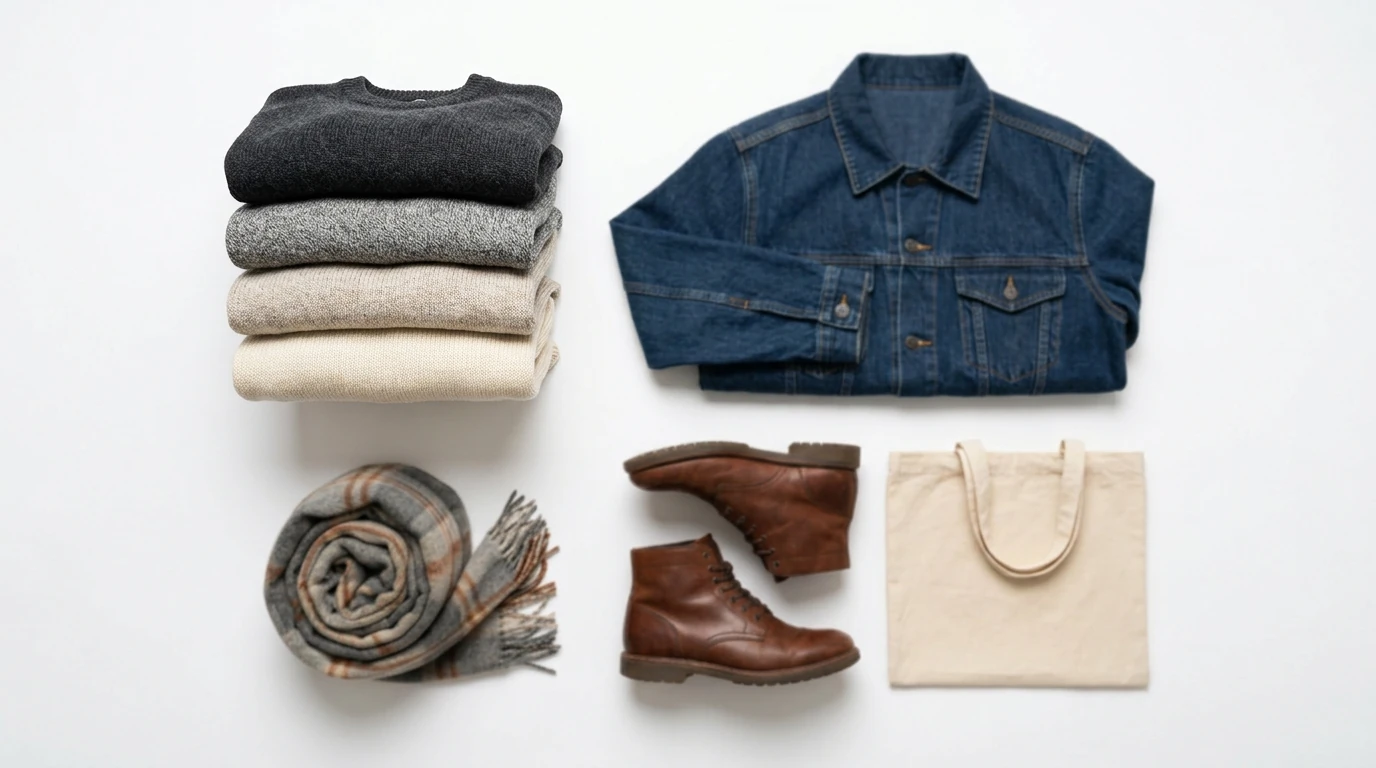
Almost every household has a bag of clothes waiting by the door, and almost every one of those bags has two or three things in it that somebody would happily pay for. Clothing is the largest secondhand category there is. It is also the one most sellers abandon first, because the listings take longer to write, the questions are fussier, and a single jacket rarely feels worth the trouble of photographing on a weekday evening.
Which is exactly why it is worth doing properly. The people who sell clothes well are not doing anything clever. They answer the two or three questions every clothing buyer has before the buyer has to ask, and they spend their effort on the handful of items where effort actually changes the price. Everything else they list quickly, cheaply, or in a bundle.
This applies whether you clear a wardrobe once a year or list steadily all season, and whether you are selling a coat that cost a lot or a stack of shirts that did not. The mechanics are identical; only the amount of care you spend per item changes. If you are still deciding what is worth your time at all, our note on the best items to resell is a good place to start.
Split the pile before you photograph anything
The first job is not listing, it is sorting, and being honest at this stage saves the whole afternoon. Make three piles: things worth a listing of their own, things worth selling only as part of a bundle, and things that should go to a charity bag or the textile bin. Most wardrobes produce a small first pile, a large second one and a third that is bigger than anyone expects.
What belongs in the first pile is fairly predictable. Outerwear, denim, boots, real leather, wool, workwear, outdoor and sports gear, occasion pieces worn once, anything still carrying its tags, and anything from a label people search for by name. What does not belong there is equally predictable: stretched knitwear, faded basics, shoes worn past the point of comfort, and anything with a stain you would rather not mention. Nothing in that last group is worth a photograph.
Photograph it the way a buyer shops
Photos carry more weight in clothing than in any other category, because the buyer cannot touch the fabric and has been disappointed before. You do not need a model or a studio. You need daylight, a plain wall, and either a hanger or a flat, uncluttered surface. Turn the overhead light off, stand near a window, and shoot in the morning or early afternoon rather than under a yellow bulb at midnight.
Take more frames than feel necessary: the front, the back, the collar and cuffs, the label with the size, the care label with the fabric composition, and a close, well-lit shot of every flaw. Colour accuracy matters more than styling, so avoid filters entirely - a jumper that arrives a different shade than the photo is a message you do not want to receive. Our guide to taking listing photos that sell covers the lighting and the first-photo decision in more detail.
Measurements beat size labels
A size label means very little on its own. Sizing differs between countries, between brands, between a garment made this year and the same style made a decade ago, and buyers who have been caught out once will not risk it again. The single most useful thing you can add to a clothing listing is a short line of measurements, and it is the thing most listings leave out.
Lay the item flat and measure it in centimetres: chest from armpit to armpit, length from the shoulder seam to the hem, waist across the top edge, inseam for trousers, and sleeve from shoulder to cuff. Say that the measurements are taken flat, so nobody has to guess whether you doubled them. Two lines of numbers will prevent more time-wasting conversations than any amount of description.
Describe the condition before anyone asks
Every experienced secondhand buyer assumes there is something you have not mentioned. The fastest way to earn their trust is to mention it first. Name the mark on the hem, the missing spare button, the slight bobbling under the arms, the fact that the zip sticks a little at the top. Photograph each one and put it in the description in plain words.
This costs you almost nothing and gains you a lot. A flaw that is disclosed becomes a reason the price is fair; a flaw that is discovered becomes a refund request and a bad exchange. It is also worth saying whether the item has been washed and how you will send it, because those are the quiet worries nobody types out. Our guide to writing better classified listings goes through the structure that works.
Write a title somebody would actually type
Clothing searches are specific. People look for a brand, an item, a size and sometimes a colour, and they look in that order. A title that reads like brand, item, size, colour will be found by the person who wants exactly that thing, which is the only person you need. A title that reads like a sale sign will be found by nobody in particular.
Leave the adjectives out of the title and put them in the description. Do not pad it with words like bargain or must go, and do not stack unrelated brand names in the hope of catching more searches, because it reads as untrustworthy and buyers notice. Our guide to posting classified ads that get replies shows what a plain, effective listing looks like from top to bottom.
Price a category that has a lot of supply
There is more secondhand clothing available than any other kind of secondhand thing, and that shapes the price more than condition does. What you originally paid is not a useful anchor, and neither is the retail price today. The useful anchor is what comparable items in comparable condition are being listed at right now, and how many of them there are.
Look at the ones that have already sold rather than the ones still sitting there, price at a round, obvious number, and leave a small amount of room for a polite offer rather than a large amount that invites a silly one. If an item is genuinely uncommon you can afford patience; if it is a good jacket in a common size, being the easy yes today beats being the best price in October. Our guide to pricing used items that actually sell walks through how to find the number.
Bundles move what single items cannot
Most of the second pile will never sell on its own, and trying to list it individually is how people burn an entire weekend for very little. Group it instead: five shirts in the same size, a set of baby clothes by age, a season of a child's wardrobe, a stack of work trousers. One listing, one photograph of everything laid out together, one price, one collection.
Bundles work because they solve a problem the buyer actually has. Parents replacing a whole size, students assembling a wardrobe in a new city, someone starting a job with a dress code - all of them would rather do one transaction than eight. The same logic runs through our piece on what students buy secondhand in August, and it applies to clothing more strongly than to anything else.
Shoes are their own problem
Shoes are the item buyers are most nervous about, because fit is unforgiving and wear is hard to judge from a flattering angle. That nervousness is an opportunity: a shoe listing that answers the doubts directly will outsell a cheaper one that does not. Say the size in more than one system if you can read them off the label, and say whether they run true to size, small or large.
Then photograph the parts nobody photographs. The soles, straight on, so the wear is visible. The insoles, which show how much they were actually worn. The heels and toes, where scuffing shows first. Mention whether you still have the box, whether they have been resoled, and whether they have been worn outdoors at all. Honesty about wear on a well-made pair is worth more than optimism about a tired one.
Coats, bags and the pieces that hold their value
A small number of clothing items behave less like clothes and more like equipment, and they are where the money in this category actually is. Winter coats, real leather jackets, wool overcoats, technical outdoor shells, sturdy boots and well-made bags all hold value for years, because the people buying them are replacing something expensive rather than chasing a trend.
These deserve the full treatment: every angle, the lining, the label, the hardware, the serial number if there is one, and whatever paperwork, spare parts or dust bag came with it. Be factual rather than defensive about authenticity - state what you know and how you know it, and let the photographs carry the rest. If you are buying to resell rather than clearing your own wardrobe, our note on the best products for quick flipping explains why these pieces keep coming back.
Sell into the season that is arriving
Clothing is the most seasonal category on any classifieds site, and the mistake almost everyone makes is listing what they have just stopped wearing. Nobody is shopping for a swimsuit in October or a parka in May. Buyers shop a few weeks ahead of the weather, which means the right time to list a coat is while it is still warm enough to be wearing a shirt.
Late August into September is the single best window in the clothing year. School and university terms start, the weather turns, wardrobes get swapped over, and buyers start thinking about jackets, boots, jumpers and indoor clothes all at once. Our note on what sells fast in late summer sets out the wider seasonal pattern; for clothing specifically, this is the fortnight to get your listings up.
Posting, meeting and getting paid
Clothing is one of the few categories where posting an item is usually easier than meeting in person, because it is light and it packs small. If you post, weigh the parcel before you quote a price rather than after, use a bag rather than a box where you can, and keep the proof of postage until the buyer confirms it arrived. Quote postage honestly in the listing; a surprise at the end loses the sale.
If you meet instead, keep it as simple as any other handover: a public place or a doorstep, daylight, and no trying things on at your home. Take payment in a way you understand and can verify before the item leaves your hands. Our buyer and seller safety checklist covers both sides of the meeting, and our roundup of marketplace scams to watch right now is worth a read before you agree to any unusual payment arrangement.
The questions you will get, and how to answer them
Clothing sellers get the same three messages over and over. Is it still available. Will it fit me. Would you take less. You can answer the first by keeping your listings current and deleting what has gone, the second by having the measurements already in the description, and the third by knowing your own floor before anyone asks so you can reply in one line rather than deliberating for a day.
Speed is worth more than eloquence here. A short, friendly, immediate reply converts better than a careful one written the next morning, because clothing buyers are usually messaging several sellers at once. Keep a couple of stock sentences ready for measurements and collection, stay polite when an offer is low, and be willing to say no without turning it into a negotiation you did not want.
If it has been up a week and nothing has happened
Views without messages is a listing problem, not a demand problem, and clothing gives you plenty to fix. Change the first photograph, because it is doing most of the work. Rewrite the title so the brand and size are in it. Add the measurements if they are missing. Then, and only then, adjust the price. Our guide on how to revive a listing that didn't sell gives the order to work through.
If the listing is already good and simply buried under everything else people are clearing out this month, the answer is visibility rather than another rewrite, and these tactics to boost listing visibility fast are the place to start. On a marketplace like Advertigo, where posting an ad is free, the only real cost of trying again is the twenty minutes it takes - and the coat in the back of the wardrobe is not getting any more valuable while it hangs there.