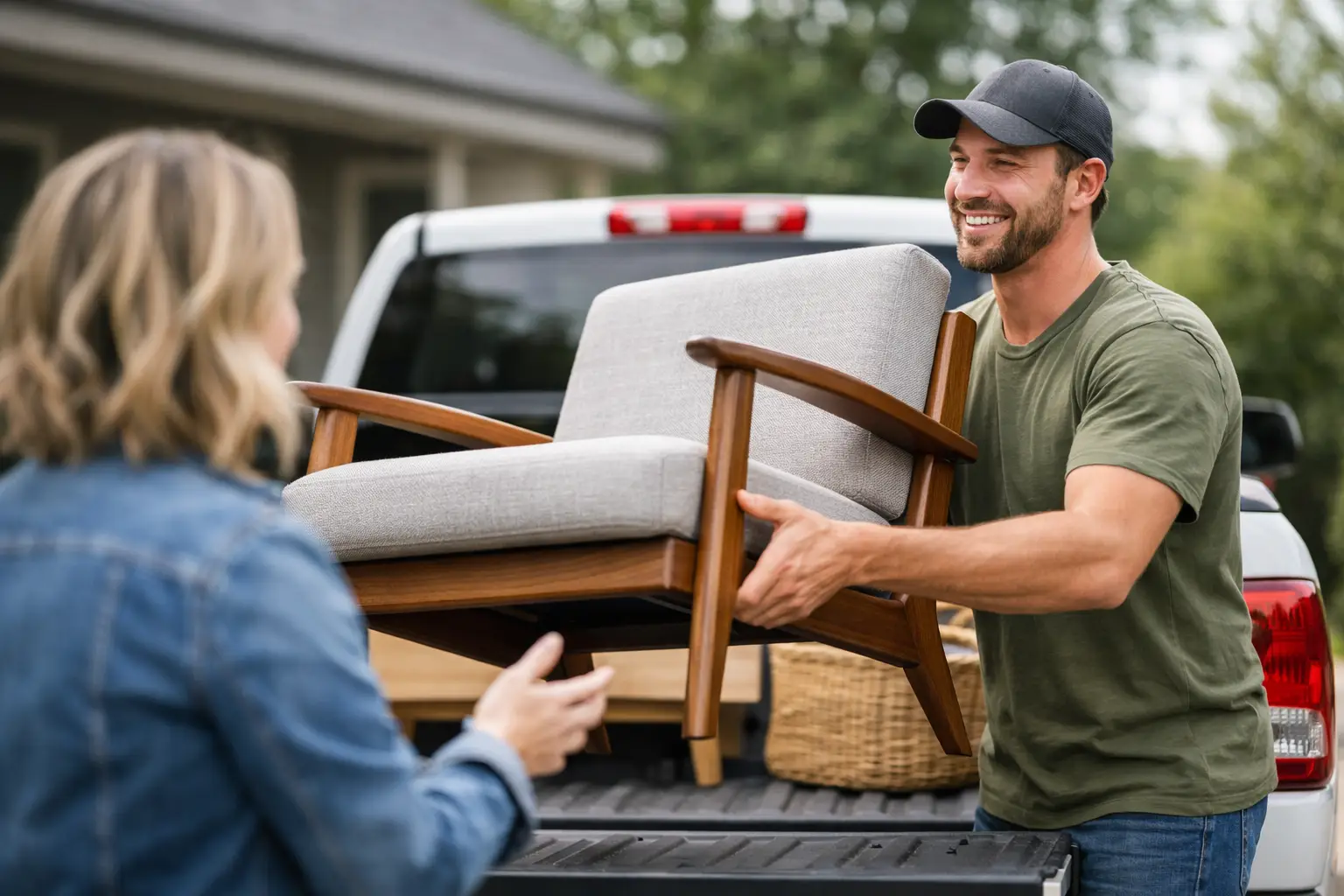
That oversized dresser in the guest room is not just taking up space - it is also harder to sell than a lamp or a pair of headphones. When you sell furniture with local pickup, the item is bigger, the buyer has to plan transportation, and the handoff matters more. The good news is that local pickup can also make furniture easier to move because buyers nearby are already looking for practical deals they can load up and take home.
Furniture is one of the best categories for local classifieds because shipping is expensive, risky, and usually not worth the trouble for everyday pieces. A buyer who can see the item, confirm the condition, and pick it up the same day is often much more likely to commit. For sellers, that means fewer packing headaches, no freight quotes, and a simpler path from listing to pickup.
Why local pickup works for furniture
Most used furniture does not fail to sell because nobody wants it. It fails to sell because the listing makes the transaction feel difficult. If the buyer has to guess the size, wonder whether it fits in an SUV, or chase the seller for basic details, they move on.
Local pickup removes one major obstacle: shipping. But it also raises a different question for the buyer - is this item worth the drive? Your job is to answer that quickly. Clear photos, exact dimensions, honest condition notes, and a realistic price do more than make the ad look better. They reduce hesitation.
This is especially true for common pieces like couches, dining tables, bed frames, bookshelves, office chairs, and accent cabinets. Buyers often compare several local listings at once. The seller who makes pickup simple usually wins.
How to sell furniture with local pickup without wasting time
The fastest way to lose momentum is to post a vague ad and spend the next three days answering the same questions. A strong listing does the work upfront.
Start with a title that says exactly what the item is. “Wood dining table with 4 chairs” will outperform “nice furniture set” every time. If the brand is known, include it. If the style matters, mention it. Buyers search for specifics.
Your photos should cover the full piece from multiple angles, along with close shots of wear, fabric texture, corners, legs, drawers, and hardware. Natural light helps. So does a clean background. You do not need a studio setup, but you do need images that show what the buyer is getting.
Descriptions should answer the practical questions first. Include width, depth, and height. Mention materials if you know them. State whether the item comes apart for transport. If it is heavy, say so. If stairs are involved at pickup, mention that too. Buyers planning a local furniture pickup want to know whether they need one person, two people, or a truck.
Price matters, but not in the way many sellers assume. Starting too high can make a good item sit. Starting too low can create a flood of messages that go nowhere. A better approach is to look at comparable local listings, then price according to condition, brand recognition, and how quickly you want it gone. A solid wood dresser from a known brand can justify a stronger price than a basic particleboard unit with visible wear.
What buyers need before they commit
Most furniture buyers are trying to solve a practical problem. They need a desk for a home office, a sofa for a first apartment, or a bed frame before the weekend. They are not looking for mystery.
That is why specifics sell. If the couch has a small stain on the back cushion, say it. If the table has scratches from normal use, show them. Honest listings tend to convert better because they build confidence. Nobody likes driving across town to find out the real condition was hidden in the photos.
Availability also affects response rate. If you can meet today, say so. If pickup is only available on weekends, put that in the listing. The clearer your time window, the easier it is for serious buyers to decide.
On a platform built for simple posting and broad visibility, like Advertigo, the advantage is straightforward exposure. Buyers browsing furniture listings are already in shopping mode. Your ad still has to do its part, though. A complete listing gets more qualified replies than a rushed one.
Pricing for local pickup furniture sales
There is no single rule for pricing used furniture because condition, style, demand, and neighborhood all affect buyer interest. Still, a few patterns hold up.
Large furniture often sells faster when the price reflects the effort required to pick it up. A buyer may love your sectional, but if they need to borrow a truck, recruit a friend, and carry it down stairs, that convenience cost becomes part of the decision. The price has to feel worth the trip.
For standard household items in decent condition, a practical price usually performs better than an aspirational one. If your goal is speed, leave room for a buyer to feel they found a local deal. If your item is premium, newer, designer, or in unusually strong condition, you can hold firmer - but only if the listing proves it.
If you are getting lots of views or messages but no commitment, the price may be slightly high, or the listing may be missing key information. If there are no messages at all, revisit both price and presentation before assuming there is no demand.
Making pickup easy and safe
Local pickup is convenient, but it works best when the plan is simple. Confirm the pickup time clearly. Confirm the item dimensions again if needed. Ask the buyer what vehicle they are bringing if the piece is bulky. This avoids the common problem of someone arriving with a sedan for a full-size couch.
Payment should be discussed before pickup, not during it. That keeps the exchange quicker and reduces friction. If you are accepting cash, say so. If you prefer a digital payment method, confirm it in advance.
Safety matters too, especially for high-traffic household pickups. Many sellers prefer a porch, garage, lobby, storage unit, or another convenient meeting area when possible. For very large furniture, pickup may need to happen inside the home, but you can still keep the process direct by having the item ready near the door and limiting delays.
If the buyer wants you to hold the item, decide your policy early. Some sellers hold only with payment. Others operate first come, first served. Either way is fine as long as you communicate it plainly in the listing or early in the conversation.
Common mistakes when you sell furniture with local pickup
A lot of furniture listings fail for reasons that are easy to fix. One is leaving out dimensions. Another is posting dark photos that make condition impossible to judge. A third is describing the item with general words like “great” or “beautiful” instead of useful details.
Another common mistake is forgetting the pickup experience. If the item is on the third floor, requires disassembly, or needs two strong people to move, buyers should know that before they arrive. Surprises kill sales.
Slow replies also cost sellers real opportunities. Furniture buyers often message several listings at once. The first seller who answers clearly, confirms availability, and sounds organized is more likely to get the sale.
Finally, do not let emotion set the price. What you paid five years ago, or how much you liked the piece, does not drive the market. Local demand, condition, and pickup effort do.
When local pickup is better than delivery
Some sellers wonder whether offering delivery will help. Sometimes it does, especially for smaller pieces or if you already have a truck. But it also adds scheduling problems, fuel costs, no-shows, and extra labor.
For many sellers, local pickup is the better option because it keeps the transaction cleaner. The buyer handles transportation. The seller focuses on presenting the item well and being available for pickup. That is often the most efficient setup for used furniture.
There are exceptions. If you are selling multiple pieces, higher-end items, or furniture in a dense local area where short delivery is easy, offering delivery for an added fee may widen your buyer pool. But if your goal is quick turnover with minimal hassle, local pickup usually keeps things moving.
Selling furniture locally works best when you think like a buyer. Show the piece clearly, price it for the real market, and make pickup feel easy before anyone sends the first message. When the listing answers the obvious questions and the handoff is simple, furniture stops feeling like a hard sell and starts moving like it should.