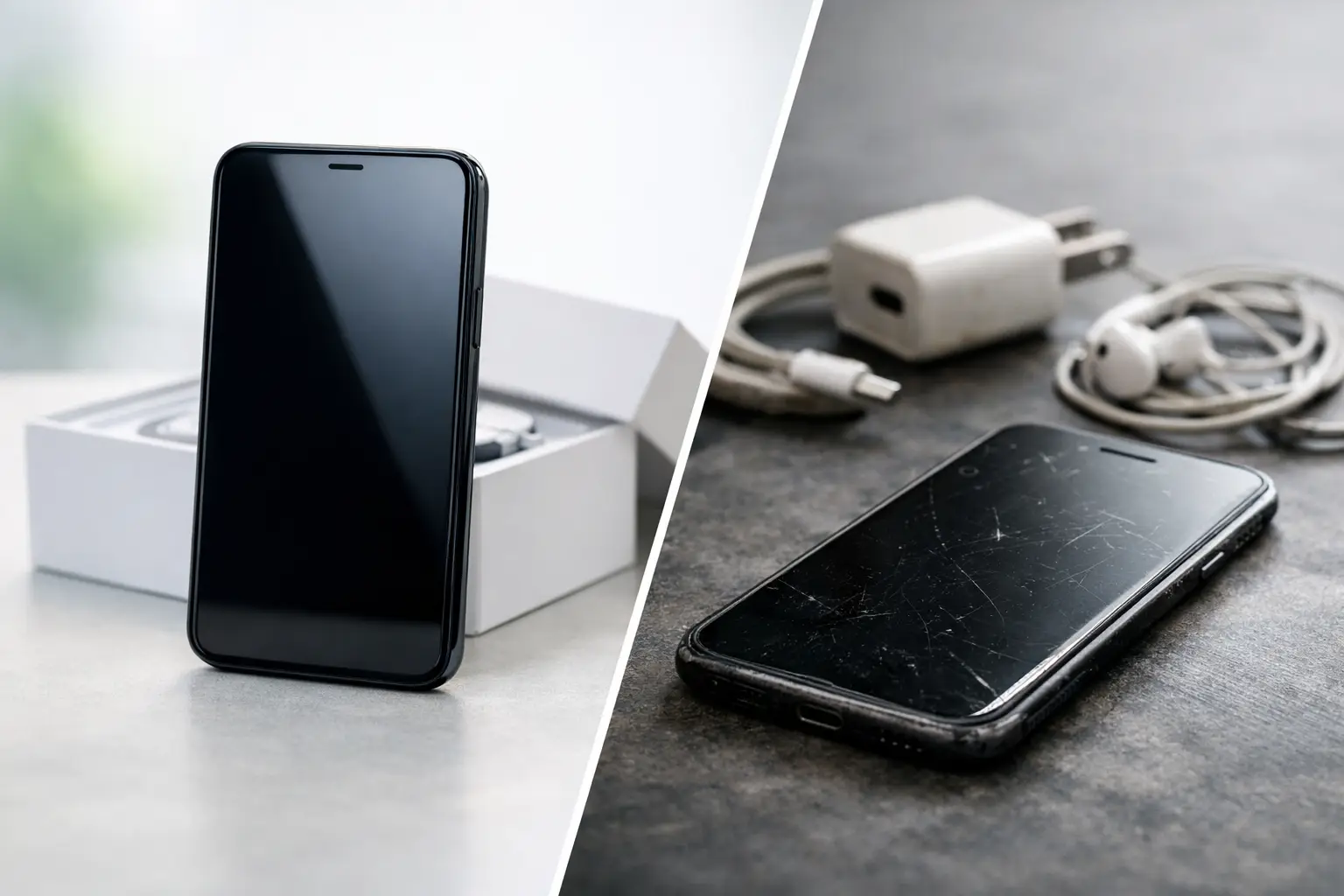
That price gap gets real fast. A brand-new phone can cost as much as a monthly car payment, while a used model with solid performance may be listed for a fraction of that. When people compare new phones versus used phones, they are usually not choosing between good and bad. They are choosing between paying more for certainty or paying less for value.
If you are buying for everyday use, resale, side hustle inventory, or a quick replacement, the better option depends on how long you plan to keep the phone, how much risk you can tolerate, and which features actually matter to you. A new flagship is not always the smart buy. A used phone is not always the bargain it appears to be.
New phones versus used phones on price
The most obvious difference is the upfront cost. New phones carry the highest price because you are paying for current hardware, untouched condition, retail packaging, and full manufacturer support. That premium can make sense if you want the latest camera system, the strongest battery life, or years of software updates ahead of you.
Used phones compete on value. A one- or two-generation-old device often handles calls, apps, photos, mobile payments, and streaming without much trouble. For many buyers, that is enough. If your goal is to stay connected without stretching your budget, used inventory can open up much better specs per dollar.
This is also where the market matters. On a classifieds platform, buyers can often compare several listings in the same model range and spot realistic pricing faster than they would in a fixed-price retail setting. Sellers also have room to position a clean, well-kept phone at a price that moves.
What you get when you buy new
A new phone offers predictability. You know the battery has not been worn down by months of charging cycles. You know the screen has not been replaced with a lower-quality part. You know the device has not been exposed to water, drops, or repair shortcuts that are hard to spot in photos.
That confidence has real value. New phones usually include a manufacturer warranty, easier return options, and a clean activation history. If something goes wrong early, the process is usually simpler. For buyers who need a work phone, rely on their device all day, or do not want to troubleshoot after purchase, buying new can be the safer path.
There is also the software timeline. A newly released phone typically has the longest runway for operating system updates and security support. If you plan to keep the device for four or five years, that longer support window can matter more than the sticker price.
What you give up when you buy new
The trade-off is depreciation. Phones lose value quickly, especially in the first year. The moment a newer model arrives, last season's flagship can drop hard on the resale market. That means the buyer who pays top dollar upfront usually absorbs the biggest loss later.
You may also be paying for features you will not use. Better zoom, more storage, premium materials, or advanced AI tools sound good in a product launch, but many people just need reliable battery life, a decent camera, and enough speed for daily apps. If that is your use case, buying new can be overkill.
Why used phones appeal to practical buyers
Used phones make sense when budget leads the decision. They can also make sense when flexibility matters more than owning the latest release. A buyer can often afford a higher-tier older model instead of a lower-tier new model at the same price. In plain terms, that may mean a better display, stronger camera, or more storage for the same money.
Used phones are also useful in situations where perfect condition is not the priority. Parents buying a first phone for a teenager, small businesses adding backup devices, and resellers watching margins all tend to look at used inventory differently than someone shopping for a personal upgrade every few years.
There is a sustainability angle too, even if that is not the main reason most people shop used. Extending the life of a device keeps usable electronics in circulation longer. For some buyers, saving money and reducing waste can line up.
The real risks with used phones
The problem with used phones is not that they are used. The problem is inconsistency. One listing may be a lightly handled device in excellent shape. Another may have hidden issues that do not show up until after the sale.
Battery health is the first thing many buyers underestimate. A phone can look clean and still have a battery that drains quickly or shuts down under load. Then there is the repair history. A screen replacement might be fine if it was done properly, but poor repairs can affect display quality, touch response, water resistance, and future serviceability.
There are also account and network issues to consider. A phone can be carrier-locked, blacklisted, financed, or still tied to someone else's account if the seller has not fully cleared it. Those are not small inconveniences. They can turn a cheap buy into a useless device.
How to judge used listings without overcomplicating it
Most buyers do not need to be phone experts. They just need to ask the right questions and verify the basics. Start with condition, battery health if available, storage size, carrier status, and whether the phone is fully paid off and reset. Ask if any parts were replaced and whether Face ID, fingerprint unlock, charging port, cameras, and speakers all work normally.
Photos matter. Clear shots of the screen, back, sides, and any visible damage tell you more than vague wording like good condition. If the listing skips details, ask. A serious seller should be able to confirm model number, condition, and key functions without a long back-and-forth.
Price should also match the story. If a newer model is listed far below similar listings, be careful. A low price can be a real deal, but it can also signal damage, lock issues, missing parts, or a seller rushing the transaction.
New phones versus used phones for different buyers
If you upgrade rarely and want the longest useful life, new often makes more sense. The higher upfront cost may spread out over several years, and you get a full support cycle, fresh battery, and fewer unknowns.
If you replace devices more often, need a secondary phone, or simply want the most value for your budget, used is often the better play. That is especially true when buying a model known for reliable performance one or two generations after launch.
For resale-minded buyers and side hustlers, margins usually favor used devices bought carefully at the right price. For sellers, a well-presented used phone listing can attract fast interest when the condition is clear and the price is realistic. That is why marketplaces such as Advertigo can work well for both sides - buyers get variety, and sellers get a straightforward way to post and be found.
When buying used is smarter than buying cheap-new
This is the comparison people miss. The real choice is not always between a premium new phone and a premium used phone. Often it is between a budget new phone and a used higher-end phone.
That can change the math. A used flagship from a year or two ago may still outperform a brand-new budget model in camera quality, speed, build quality, and screen performance. The new budget phone gives you a warranty and untouched battery, but the older flagship may deliver a better day-to-day experience.
It depends on priorities. If battery certainty and warranty support come first, cheap-new can win. If overall quality matters more, used premium can be the better buy.
The better question before you buy
Instead of asking which category is better, ask what problem you are solving. Need a dependable daily device for years? New has a strong case. Need the most phone for the least money? Used usually has the edge. Need something fast, affordable, and replaceable without much downside? A clean used model is often the practical answer.
The smartest buyers stay focused on fit, not hype. Shop the model, the condition, the support timeline, and the real market price. If you do that, the choice between new and used gets a lot simpler - and a lot more profitable for your budget.
A phone is only a good deal if it still feels like one after a few months of use.